TL;DR
A skills intelligence platform is an AI-powered system that maps, infers, and activates workforce skills data across the HR stack. Evaluating one requires looking beyond feature lists at seven critical dimensions: ontology depth, AI inference methodology, language coverage, integration breadth, time-to-value, ethical AI governance, and customer adoption track record. This guide gives HR leaders a structured framework for running a skills intelligence RFP, including the exact questions to ask vendors and the red flags that should disqualify them.
If you're running an RFP for a skills intelligence platform in 2026, you're navigating one of the noisiest categories in HR tech. Every vendor claims AI-powered skills mapping. Every demo looks polished. Every reference customer reports impressive numbers. And yet, according to multiple analyst reports, including Josh Bersin's research on enterprise talent intelligence, more than half of enterprise skills initiatives stall within 18 months of deployment.
The problem isn't that vendors lie. The problem is that most RFP processes are built for traditional software procurement (focus on features, pricing, and integrations) and skills intelligence is not traditional software. It's a data platform, an AI system, a change management challenge, and a long-term strategic bet rolled into one.
This guide gives you the framework analysts and procurement teams use to evaluate skills intelligence platforms properly. It covers what the category actually means, the seven evaluation criteria that matter most, the exact questions to ask each vendor, the red flags that should kill a shortlist, and a five-step process for running the RFP itself.
By the end, you'll have a defensible scoring methodology, not a vendor preference shaped by who gave the best demo.
Why traditional vendor selection fails for skills intelligence
Because skills intelligence platforms are not feature products. They are data products, and traditional RFPs evaluate features. A platform that ranks high on feature checklists can still fail if its underlying skills ontology is shallow, if its AI requires employee self-assessment to function, or if its integrations break under real enterprise load.
Three patterns explain why so many skills intelligence RFPs select the wrong vendor.
Demo bias. Vendors invest heavily in scripted demos that showcase best-case scenarios. Two hours of demo cannot reveal how the platform behaves on your messy HRIS data, your multilingual workforce, or your industry-specific skill nomenclature. Decisions made on demos alone consistently disappoint at deployment.
Feature fixation. Skills intelligence buyers often build long feature lists (skill profiles, gap analysis, career pathing, learning recommendations, etc.) and score vendors on coverage. But every serious vendor in the category checks every box on a feature list. The differentiation lies in how deep each capability actually goes.
Underestimating activation. A skills intelligence platform that nobody uses delivers zero ROI. Most RFPs barely address change management, adoption metrics, or the level of employee participation required for the platform to produce value. This is consistently the variable that determines success or failure 12 months in.
The framework that follows fixes these three blind spots.
What a skills intelligence platform actually is
A skills intelligence platform is an AI-powered system that ingests workforce data from across the HR stack (HRIS, ATS, LMS, performance reviews, project records) and produces a continuously updated map of who has which skills, at what proficiency, and where the gaps and opportunities lie. It sits as an intelligence layer above existing HR systems, not as a replacement for them.
To evaluate platforms properly, you need to distinguish them from adjacent categories.
Skills intelligence vs HRIS. Your HRIS (Workday, SAP SuccessFactors, Oracle HCM) stores employee records and positions. A skills intelligence platform reads from your HRIS and infers what those records mean in skills terms.
Skills intelligence vs LMS. A learning management system delivers training. A skills intelligence platform tells you which training to recommend to whom, and verifies whether the skill was actually acquired.
Skills intelligence vs talent marketplace. A talent marketplace matches employees to internal opportunities. The skills intelligence layer is what makes the matching meaningful. Without a skills graph underneath, a talent marketplace is a glorified job board.
Skills intelligence vs workforce analytics. Workforce analytics reports on headcount, attrition, and demographics. Skills intelligence reports on capability and capacity. The two are complementary, not substitutes.
Knowing exactly which category your RFP is targeting prevents the most common procurement mistake: writing a skills intelligence RFP that secretly evaluates talent marketplaces, or vice versa. Josh Bersin's analysis of the skills-based organization market maps these categories in depth and is worth reading before finalizing your scope.

The 7 critical evaluation criteria for skills intelligence platforms
This is the core of the guide. These seven dimensions, weighted appropriately for your context, give you a defensible scoring framework. Each criterion includes the questions to ask every vendor in your shortlist.
1. Skills ontology depth and standards alignment
This is the single most important criterion, and the one most RFPs underweight. The skills ontology is the foundation. A shallow or proprietary ontology will limit every other capability for years.
What to look for:
- A reference library of at least 10,000 skills covering both your industry vocabulary and emerging capabilities (AI, sustainability, digital).
- Alignment with open standards like ESCO (European Skills, Competences and Occupations), O*NET, or the WEF Global Skills Taxonomy. Proprietary-only taxonomies create vendor lock-in.
- Cross-walking capability between taxonomies for organizations operating across regulatory regions.
- Continuous ontology updates as new skills emerge.
Questions to ask the vendor:
- How many skills are in your reference library, and how do you update it?
- Which open standards does your taxonomy align with?
- Can we extend or customize the ontology for our industry-specific vocabulary?
- How do you handle synonyms, multilingual variants, and skill hierarchies?
2. AI inference methodology
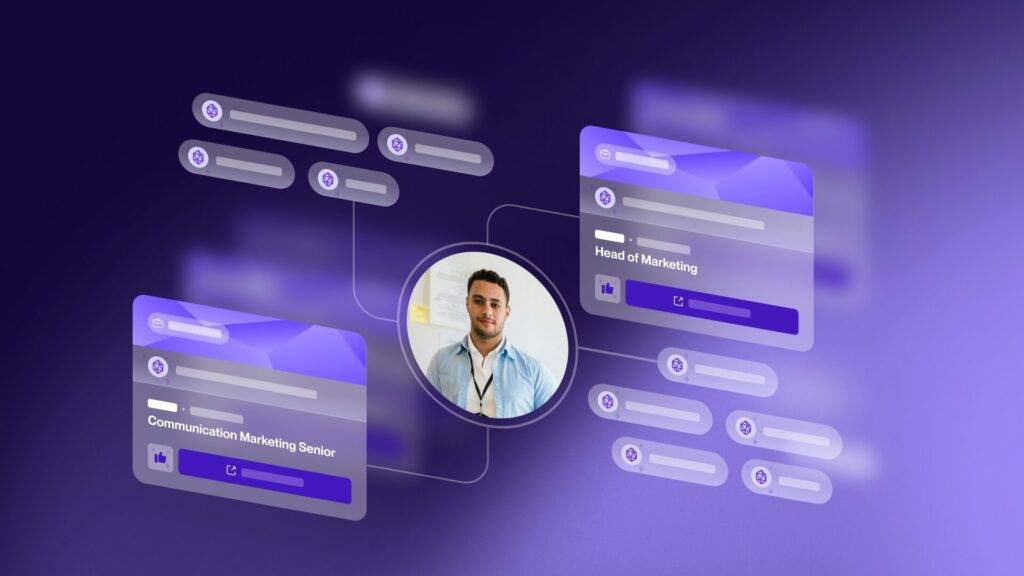
The difference between platforms that work and platforms that disappoint comes down to one question: does the AI infer skills from existing data, or does it depend on employees filling out questionnaires?
The self-assessment model has consistently failed at enterprise scale. Adoption is incomplete, data quality is poor, and the profile decays within months. Modern skills intelligence platforms infer skills automatically from job histories, training records, certifications, project assignments, and performance data already captured in HR systems.
What to look for:
- Skill inference from multiple existing data sources, not just employee declarations.
- The ability to generate a baseline skills map without requiring employee login or input.
- Transparent confidence scores for inferred skills.
- Continuous re-inference as new data is captured.
Questions to ask the vendor:
How fast does the platform detect newly acquired skills?
Can your platform generate a workforce skills map without requiring employees to log in?
What data sources does your AI use to infer skills?
How do you handle confidence levels for inferred vs verified skills?
3. Multi-language and global coverage
For any organization operating across borders, language coverage is not a nice-to-have. It is the difference between a unified global view and a fragmented set of country silos.
A skills intelligence platform must handle skills in their native language while maintaining a single unified taxonomy underneath. A French engineer's "gestion de projet agile" and an American engineer's "agile project management" must resolve to the same node in the skills graph.
What to look for:
- Native support for all languages your workforce operates in (not just translation overlays).
- Cross-lingual skill matching: a Spanish-language resume should match an English-language job description if the underlying skills align.
- Regional ontology variations where they matter (US software engineering roles use different vocabulary than European ones).
Questions to ask the vendor:
- How many languages does your platform support natively?
- Can you demonstrate cross-language matching on real data?
- How do you handle regional skill variations within the same language (US vs UK English)?
4. HR ecosystem integration breadth
A skills intelligence platform that doesn't integrate cleanly with your existing HR stack will produce stale, partial data forever. This criterion is often glossed over in demos, where vendors show beautiful dashboards built on perfectly clean sample data.
What to look for:
- Native, pre-built integrations with your specific HRIS (Workday, SAP SuccessFactors, Oracle HCM, etc.) and your specific LMS and ATS.
- Bidirectional data sync, not one-way reads.
- A roadmap that covers your future stack, not just your current stack.
- A reference architecture for organizations with hybrid or fragmented HR landscapes.
365Talents, for example, integrates with more than 100 enterprise HR applications, which gives organizations flexibility regardless of their current stack composition.
Questions to ask the vendor:
What happens to skills data if we migrate HRIS in 3 years?
Do you have a pre-built native integration with [your HRIS]?
What is the typical time-to-integrate?
Is the integration certified by the HRIS vendor?
5. Activation speed and time-to-value
The number of months between contract signature and the first usable skills map is a far better predictor of success than feature completeness. Long deployments lose executive sponsorship, drain budgets, and create deployment fatigue that kills adoption.
What to look for:
- Time-to-first-skills-map measured in weeks, not quarters.
- A deployment model that doesn't require an enterprise-wide employee engagement campaign as a prerequisite.
- Clear milestones for early ROI (succession planning visibility, internal mobility matching, workforce planning baseline).
- The ability to start with a critical population and expand, rather than requiring a full rollout.
This is where solutions like 365Talents Skills View have changed the conversation. By activating existing HRIS data through AI skills detection, organizations can build a usable skills map in weeks without asking employees to log in or fill out questionnaires.
Questions to ask the vendor:
- What is the typical time from contract to first usable skills map?
- Can we deploy on a critical population first and expand later?
- What does the activation timeline look like for our specific HRIS environment?
- How long before we can run our first succession planning exercise on this data?


6. Ethical AI and bias governance
Skills intelligence platforms make decisions that affect careers, promotions, and pay. The governance model behind the AI is now a procurement-critical criterion, not a compliance afterthought.
In 2026, the EU AI Act classifies workforce AI systems as high-risk under Annex III, with transparency, human oversight, and bias audit requirements. US state regulations (Illinois, New York City) impose similar obligations. Buyers should verify these capabilities before signing.
What to look for:
- Documented bias audits across demographic groups (gender, age, ethnicity, disability).
- Explainability of recommendations (why was this candidate surfaced for this role?).
- Human-in-the-loop controls for consequential decisions.
- EU AI Act readiness documentation.
- Customer references that have passed regulatory or internal AI ethics audits.
Questions to ask the vendor:
- How often do you audit your AI for bias, and can you share results?
- Can a recruiter or manager see why the platform recommended a specific candidate?
- What controls do we have to override AI recommendations?
- How are you preparing customers for EU AI Act compliance?
7. Customer adoption and change management track record
A skills intelligence platform that delivers strong ROI in published case studies but achieves only 20% employee adoption at your organization is a failure, regardless of its technical merits. Adoption rate is the variable that separates winning deployments from disappointing ones.
What to look for:
- Published activation rates from comparable customers, not just logo lists.
- Change management methodology and resources included in the offer.
- Employee-facing UX that creates immediate personal value (career discovery, learning, opportunities) so they have a reason to engage.
- Manager enablement tooling.
- Reference customers operating at industrial scale (10,000+ employees), not just SMBs.
For context, Alstom achieved a doubling of activation rate within two weeks of switching to 365Talents and was awarded the 2026 HR AI Trophy for its skills-based transformation. RTE reached 81% activation across its workforce. These are the kinds of numbers that should anchor your evaluation.
Questions to ask the vendor:
What is your manager enablement strategy?
What is the average employee activation rate across your customer base?
Can you connect us with three customers of similar size and industry?
What change management resources do you include in the implementation?
Red flags to watch in vendor responses
Even structured RFPs can be derailed by polished responses that mask underlying weaknesses. The following patterns should trigger deeper investigation or outright disqualification.
Proprietary-only taxonomy with no open standard alignment. Creates permanent lock-in. Skills data cannot be portable.
Mandatory employee self-assessment as the primary data source. A flashing warning sign. Self-assessment programs fail at scale and the platform's value will collapse with declining engagement.
Vague or absent integration specifics. "We integrate with Workday" can mean anything from a certified bidirectional API to a one-way CSV export. Demand specifics.
Single-region customer references. A vendor with only US references for a global deployment, or only European references for a global deployment, will struggle with the regions they haven't operated in.
Refusal to share aggregate adoption metrics. Vendors confident in their adoption results publish them. Vendors who deflect this question have a reason to.
No published bias audit methodology. In 2026, this is no longer acceptable for any AI vendor in HR tech.
Time-to-value measured in quarters rather than weeks. A 9-12 month deployment timeline before first usable skills data signals architectural problems.
Heavy dependency on consulting services for basic deployment. A platform that requires extensive professional services for routine deployment is not a product, it's a project. The economics will not work at scale.

A 5-step process for running a skills intelligence RFP
The selection methodology matters as much as the criteria. The following process is what works for enterprise skills intelligence procurement.
Step 1: Scoping (2-3 weeks)
Define your binding constraint. Are you primarily solving for internal mobility? Succession planning? Workforce reorganization? Reskilling at scale? The answer determines which evaluation criteria carry the most weight in your scoring matrix.
Identify your non-negotiables (must integrate with your HRIS, must support specific languages, must comply with specific regulations) and your nice-to-haves.
Step 2: Longlist and RFI (3-4 weeks)
Build a longlist of 6-8 vendors based on analyst coverage (Bersin, Gartner, IDC, Fosway), peer references, and category-specific publications. Issue a short RFI focused on disqualifying criteria: company viability, security certifications, integration capability with your specific HRIS, baseline customer references.
Cut to 3-4 vendors for the full RFP.
Step 3: Detailed RFP (4-6 weeks)
Use the seven criteria above as your RFP structure. Require specific, evidence-backed answers, not marketing prose. Demand:
- Customer references with comparable industry, size, and HRIS
- Documented adoption metrics, not testimonials
- Specific integration architecture diagrams
- Bias audit results
- Detailed implementation roadmap
Step 4: Demos and POC (4-8 weeks)
Replace scripted demos with structured POCs run on a slice of your real data. Define success criteria upfront. A two-week POC on a sample of your HRIS data tells you more than ten hours of scripted demo.
Step 5: Scoring and decision (2 weeks)
Apply your weighted scoring matrix. Pressure-test the leading vendor with reference calls (talk to at least three customers, including one that's been live for 18+ months). Negotiate based on the second-place vendor's capabilities, not their pricing.
Total elapsed time: typically 4-6 months for an enterprise skills intelligence RFP.
Building your scoring matrix
A defensible scoring matrix uses weighted criteria. Default weightings to consider:
- Skills ontology depth: 20%
- AI inference methodology: 20%
- HR ecosystem integration: 15%
- Activation speed and time-to-value: 15%
- Customer adoption track record: 10%
- Ethical AI and bias governance: 10%
- Multi-language and global coverage: 10%
Adjust weights based on your binding constraint. A global enterprise might weight language coverage at 20%. A regulated industry might weight ethical AI governance at 20%. A turnaround context (post-merger, reorganization) might weight activation speed at 25%.
Score each vendor 1-5 on each criterion based on evidence, not impression. Multiply by weight. Sum. The winner is the highest weighted score, not the one with the best demo.
Conclusion
Buying a skills intelligence platform is a five-to-ten year decision. The platform you choose will sit in your HR stack longer than most of your other HR tech, because skills data accumulates value over time and migration becomes painful fast.
The seven criteria in this guide, applied through a structured five-step process, produce defensible procurement decisions. They also surface the vendors whose marketing promises don't survive a serious RFP.

FAQ
What is a skills intelligence platform?
A skills intelligence platform is an AI-powered system that maps, infers, and updates workforce skills data by reading from existing HR systems (HRIS, ATS, LMS, performance records). It produces a continuously updated picture of who has which skills, at what proficiency, and where capability gaps exist. It sits as an intelligence layer above existing HR systems, not as a replacement.
How is a skills intelligence platform different from a talent marketplace?
A talent marketplace matches employees to internal opportunities. A skills intelligence platform is the data foundation that makes the matching meaningful. Many vendors offer both, but they are distinct categories. You can have a skills intelligence platform without a talent marketplace (for succession planning, workforce analytics) but you cannot have a meaningful talent marketplace without a skills intelligence layer underneath.
What should be in a skills intelligence RFP?
Seven evaluation criteria: skills ontology depth, AI inference methodology, multi-language coverage, HR ecosystem integration, activation speed, ethical AI governance, and customer adoption track record. Each criterion should be assessed with specific questions and evidence-based answers, not marketing prose. The RFP should also specify your binding constraint (mobility, succession, planning) and require references from comparable customers.
How long does a skills intelligence RFP typically take?
Four to six months for an enterprise procurement: 2-3 weeks scoping, 3-4 weeks longlist and RFI, 4-6 weeks detailed RFP, 4-8 weeks demos and POC, 2 weeks scoring and final decision. Compressing this timeline significantly is possible but generally produces less defensible decisions.
What's the most common mistake in skills intelligence vendor selection?
Selecting based on demos rather than POCs on real data. Vendor demos are scripted and showcase best-case scenarios. A two-week proof of concept on your actual HRIS data reveals more about platform performance than ten hours of demos. The second most common mistake is underweighting activation rate and change management capability.
How do I evaluate the AI in a skills intelligence platform?
Ask three questions. First: does the AI require employee self-assessment to produce results, or can it infer skills from existing data? Second: can you explain why a specific skill or candidate was identified (explainability)? Third: have you audited the AI for bias across demographic groups, and can you share results? Platforms that can't answer these clearly should be disqualified.
What languages should a global skills intelligence platform support?
Native support, not translation overlays, for every language your workforce operates in. Leading platforms support 40+ languages with cross-lingual skill matching, meaning a French-language resume can match an English-language job description if the underlying skills align. Test this on real data during the POC, not on vendor sample data.
What's a realistic deployment timeline for a skills intelligence platform?
Modern platforms can deliver a first usable skills map in weeks, not quarters, by activating existing HRIS data rather than requiring employee self-assessment campaigns. A reasonable benchmark is 4-8 weeks for an initial deployment on a critical population, and 3-6 months for broader rollout. Deployment timelines significantly longer than this signal architectural problems.