What a career development culture is (and isn't)
It IS: employees believe the organization is invested in their growth · managers ask about career aspirations regularly · development conversations happen on a predictable cadence · commitments are tracked and followed through · career growth is visibly available
It does NOT require: a promotion track for everyone · unlimited training budgets · a dedicated L&D team · complex technology
The four pillars
Pillar 1: Expectation-setting from the top Culture is what leaders model. Include development completion rates in quarterly people metrics. Have senior leaders share their own development stories. Recognize managers who invest in their team's growth.
Pillar 2: Manager capability and confidence Train managers on the distinction between career development and performance management. Provide a conversation framework with question prompts. Prepare them for difficult scenarios. Create peer learning communities.
Pillar 3: Employee agency and preparation Send employees prep guides before conversations. Make skills profiles visible to employees. Create internal visibility into career opportunities. Encourage employee-initiated development conversations.
Pillar 4: Structural consistency and follow-through Document commitments and share with employee · Check in at next 1:1 · Build quarterly review rhythm · Make development plan status visible to HR · Track mobility and development outcomes
Building the culture in phases
- Months 1–3: Establish baseline — audit current state, identify pilot cohort
- Months 3–6: Build infrastructure — frameworks, manager training, documentation tools
- Months 6–12: Scale and reinforce — full rollout, share early wins
- Year 2+: Sustain and evolve — ongoing reinforcement, measurement


How 365Talents supports the organizational build
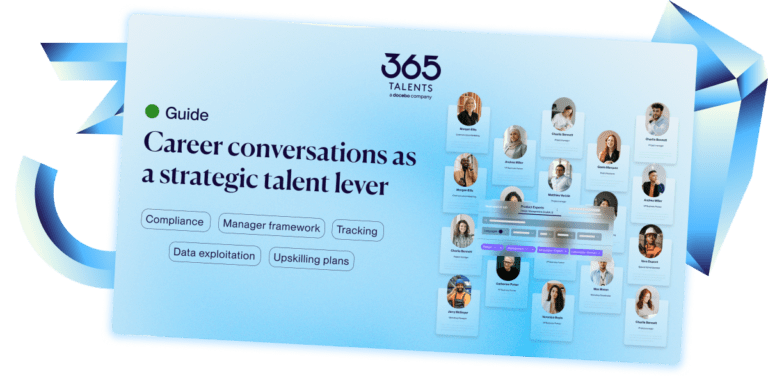
365Talents Career Discussions feature gives managers the infrastructure to make career conversations consistent, substantive, and followed through. AI prepares both manager and employee before each conversation — skills profile, gap analysis, personalized career path suggestions — so neither party arrives empty-handed.
During the conversation, relevant internal opportunities and learning recommendations surface automatically. After it, expressed development needs connect to triggered learning via Docebo and live internal mobility matching. HR gets organization-wide visibility into where career conversations are happening well, and where they're not.
The result: career development conversations that are less awkward, more consistent across teams, and — most importantly — more likely to lead to real outcomes for employees.
To see it live, book your demo today!