TL;DR: When Natal Dank called agile HR "dead" in PXO Culture's 2026 HR & People Priorities Report, she also pointed to what replaces it. The fix lives in the right-hand side of her "what went wrong" slide: a contextual toolkit over rigid frameworks, an organizational-systems view over isolated functional teams, and durable product value over reactive busywork. Read together, those answers describe product-led HR, an approach where talent is managed as one connected system rather than a stack of separate ceremonies. Skills Intelligence and internal mobility are what hold that system together.
What is product-led HR?
Product-led HR borrows one core idea from product teams: you build for outcomes and value, not for activity. Instead of measuring success by how many processes ran or how many meetings happened, you measure whether the people system actually solves the business problems in front of it.
PXO Culture has been making this case for years, naming "being product-led" as a people priority well before 2026. What is new is the framing: agile HR's failure modes are exactly the gap that a product-led, systemic approach is built to close.
Why are functional HR teams giving way to an organizational-systems view?
One of the sharper lines in Dank's diagnosis is "functional teams instead of organizational system." The point is that optimizing a single HR squad, or a single process, can make the whole system worse. Recruiting hits its targets while internal talent goes unseen. Learning ships courses that do not connect to real role moves. Each function looks efficient on its own and the organization still cannot move people to where the work is.
A systems view asks a different question: how does talent flow across the whole organization, and where does it get stuck? That reframing is the difference between a tidy org chart and an organization that can actually redeploy its people when priorities shift.
How do skills intelligence and internal mobility turn HR into a system?
This is where the abstract critique becomes operational. A system needs a shared language and a way for things to move through it. In a people system, that language is skills, and that movement is internal mobility.
- Skills intelligence gives you the shared map: what your workforce can actually do, where the strengths cluster, and where the gaps sit. Without it, every function works from its own partial picture, which is precisely the fragmentation Dank describes.
- Internal mobility is the flow. Once you can see skills across the organization, you can move people toward opportunity instead of defaulting to external hiring every time a need appears.
- Gap analysis is the feedback loop. It tells you where the system is short before that shortage becomes a crisis, so workforce planning becomes proactive rather than episodic.
Put together, these turn HR from a set of disconnected services into a system that senses and adapts. That is the "fundamental uncertainty over episodic change" idea made concrete: you are not running a one-off reorg, you are building a capability to keep redeploying as the ground moves.
What does this mean for workforce planning in 2026?
It means strategic workforce planning stops being an annual document and becomes a live view of capability against demand. When skills are visible and mobility is real, planning is something you do continuously, not once a year. You can answer "do we have the skills to do this, and if not, can we build or move them?" in close to real time.
That is a more honest answer to uncertainty than another agile ceremony. It does not promise to predict the future. It builds an organization that can respond to whatever the future turns out to be.
How do you start?
You do not need a full transformation programme to begin. A practical first step:
- Build a current picture of the skills you have, not the skills your job titles imply.
- Run a gap analysis against where the business is heading.
- Open internal mobility paths so people can move toward the gaps instead of leaving to find growth elsewhere.
For the other side of this argument, the reasons agile HR's framework-first era is ending, see our companion piece on why the author of Agile HR called it dead.
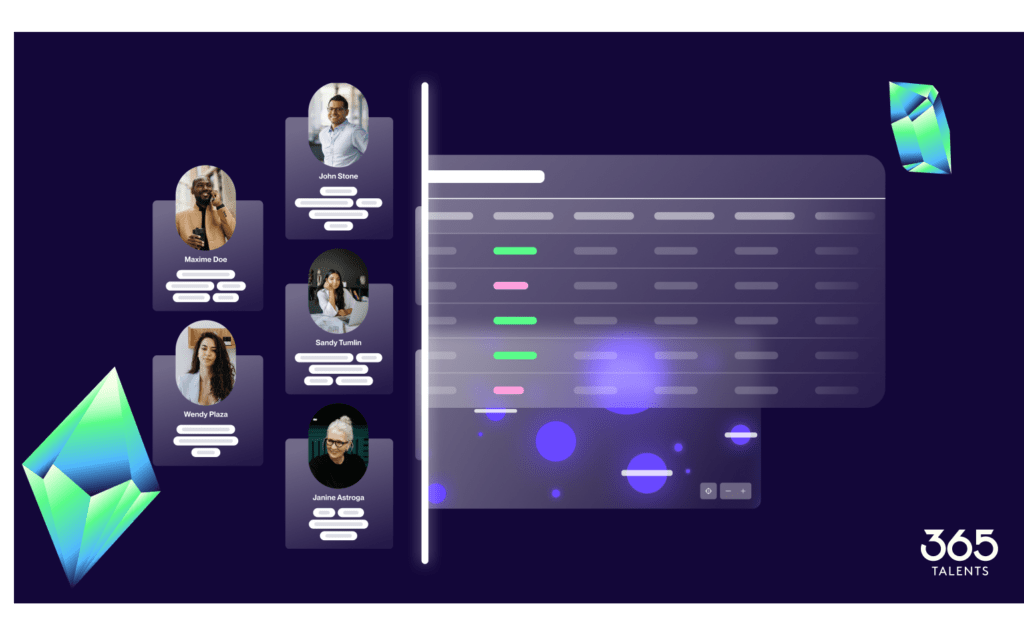
If you want to see what a skills-based, systemic view looks like in practice, explore Skills View to map skills easily, internal mobility for personalized career paths and skills gap analysis for workforce planning.
FAQ
What is the difference between agile HR and product-led HR? Agile HR, as commonly implemented, focused on ways of working such as sprints and rituals. Product-led HR focuses on outcomes and value, treating people strategy as a way to solve shared business problems rather than to run processes.
Why is internal mobility central to a systemic HR approach? Because a system needs flow. Internal mobility is how talent moves toward where it is needed once skills are visible across the organization, which reduces reliance on external hiring and unlocks existing capability.
Do I need skills intelligence before I can do this? It is the most useful starting point. A shared, accurate view of workforce skills is the common language that lets separate HR functions operate as one connected system.
Is product-led HR just a rebrand of agile HR? No. It keeps the adaptive intent that agile HR was meant to deliver, but anchors it in value and systems thinking rather than in frameworks and ceremonies.