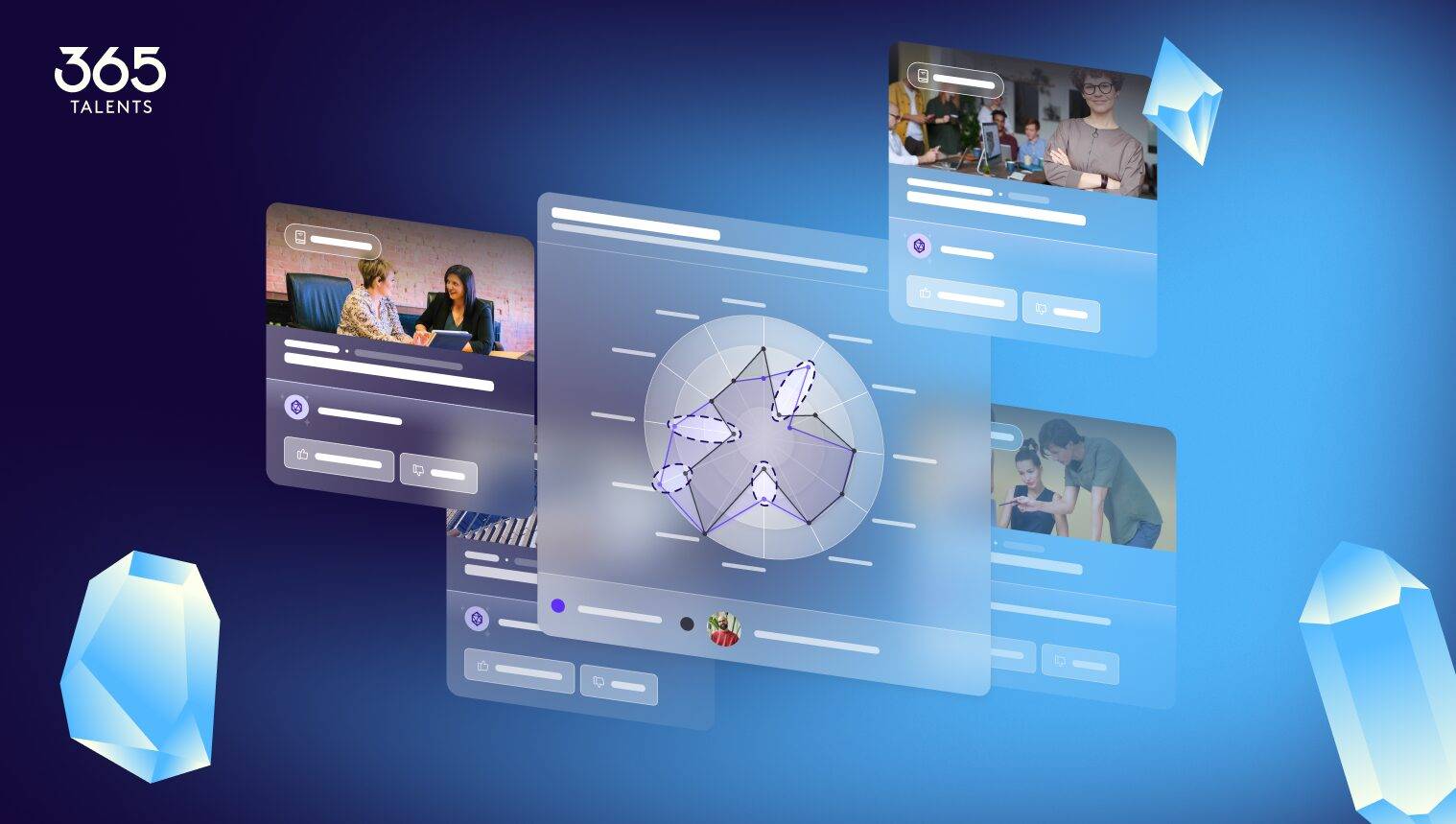
What we brought to the HRcoreNORDIC 2026 stage in Copenhagen, and why it matters for every HR leader heading into the next eighteen months.
TL;DR: Most HR teams have invested more in technology in the last five years than in the previous twenty, yet still cannot answer the question executives now ask constantly: what can our workforce actually do? That is the visibility paradox. The data already exists inside your HRIS, but it sits locked across systems, formats and languages. The fix isn't another tool or another survey. It's a skills intelligence layer that activates the data you already have. At HRcoreNORDIC 2026 we walked through how one global industrial group used that approach to turn HRIS data into 4,000 internal moves in nine months.
What did we share at HRcoreNORDIC 2026?
At HRcoreNORDIC 2026 in Copenhagen, we took the stage to make a single argument to a room full of Nordic HR leaders: the workforce-clarity problem most teams are wrestling with is an activation problem, not a data problem.
The pattern we see talking with HR leaders across the region every week is consistent. The technology stack is mature, yet the strategic question it is meant to answer stays unanswered. This article is the written version of that keynote, for the people who could not be in the room.
What is the workforce visibility paradox?
Here is the paradox in one line: HR has more data than ever, and less workforce clarity than ever.
Think about what most organizations have already built: a mature HCM system at the foundation, sophisticated learning, continuous employee listening, real-time recognition and people analytics live on the executive dashboard. Each of those represents real investment and real capability.
And yet, when a CHRO is asked by the executive team what their workforce can actually do, the honest answer is usually some version of "we're not really sure." The gap between how much data HR holds and how little workforce clarity it produces is the thing that is starting to matter in a way it did not before.
Why does workforce visibility matter now, in 2026?
Because the timeline has compressed. Three figures from the World Economic Forum's Future of Jobs Report 2025 frame the urgency:
- On average, 39% of the skills workers use today will be transformed or outdated by 2030.
- 59% of the workforce will need reskilling or upskilling by 2030.
- 63% of employers already name skills gaps as the single biggest barrier to business transformation.
If those numbers are even directionally right, this is not a 2030 problem. It is a now problem. The workforce decisions organizations face over the next eighteen months (succession, mobility, post-merger integration, the green transition, deciding where AI replaces work and where it augments it) all depend on one thing first: real visibility into what people can do now, rather than what their job title says or what they were hired to do five years ago.

If the data already exists, why can't HR see it?
This is the strange part. The raw material is already there. Inside your HRIS, whether that is UKG, Workday, SAP SuccessFactors or something else, you have job roles, career histories, training records, certifications, performance data and organizational structures. Most teams have already paid to capture all of it.
So why does visibility still feel out of reach? Three reasons:
- The data sits trapped across different systems, in different formats, often in different languages.
- It was structured for compliance and reporting, not for decisions.
- It describes what people were hired to do, not what they are capable of now.
So HR ends up deciding on proxies: job titles, tenure, manager perception, gut feel. None of those reflect the full reality of the workforce. The talent and the data are both there. What's missing is visibility into them.
What is the missing layer in your HR tech stack?
Picture the stack you have built. HCM at the base. Learning, listening, recognition, analytics and comms layered on top. Each system does meaningful work in its own lane. But between the raw data underneath and the strategic decisions on top, most organizations have a missing layer.
Call it the workforce intelligence layer, or more precisely, skills intelligence. It takes the data your systems already capture, structures it around capability, and turns it into something HR and the business can decide with.
When that layer is missing, the rest of the stack underperforms. Engagement data is interesting but not actionable. Listening surfaces problems without pointing at solutions. Learning programs are not tied to real capability gaps. Recognition rewards behaviors rather than strategic skills. Every tool does its job, yet the compounding effect the business expected never quite materializes. The missing layer is what makes everything else you have already bought work harder. (This is the same systemic argument we make in our piece on product-led HR and treating talent as a system.)
How do you move from visibility to readiness?
We describe the journey through that layer in three stages.
Visibility comes first, and it doesn't start with surveys, assessments or another initiative landing in employees' inboxes. It means activating the data that already exists in your HRIS, structuring it with AI, and surfacing it in one consistent language across roles, teams, sites and countries. The aim is to use what people have already given you. Their CVs, training records, roles and certifications are all skills data, just not yet activated.
Activation is where visibility becomes usable. You can pull up a critical role and see who is ready now and who is six months away. You can spot capability gaps before the next training spend. Managers can hold career conversations grounded in what an employee can do rather than what a job description says. And this is where employees come in: once the layer exists, they validate it, enrich it, and add what only they know. They contribute to something that already works instead of building it from scratch. That distinction matters in the Nordics especially, where HR is built on employee voice. A data-first approach does not replace that voice. It earns the right to ask for it.
Readiness is the third stage, and the one that changes the conversation with the executive team. When a reorganization hits, you model it against capability, not just headcount. When the green transition reshapes a job family, you see which skills carry across and which need to be built. When AI changes what work gets done, you can identify who is positioned to move with it and who needs support. Readiness is the strategic outcome. Visibility and activation are how you get there.
What does skills activation look like in practice?
Consider Alstom, the rail manufacturer headquartered in France and operating in 63 countries. In 2021 it completed its merger with Bombardier and the workforce doubled overnight: 55,000 employees, 5 languages, two different skills frameworks, two HR cultures and rail-sector compliance to honor throughout.
The CHRO faced exactly the question this article opens with. How do you make any meaningful workforce decision when you cannot reliably see what 55,000 people can do?
The answer was to activate what they already had. Alstom connected the data sitting in its SAP SuccessFactors environment (job histories, training, certifications, roles, evaluations and open positions) into a unified skills layer with 365Talents. Our AI handled the heavy lifting of structuring and translating across languages. Managers and employees came in afterwards to enrich what the data surfaced.
How long does it take to activate skills data?
For Alstom, the deployment took nine weeks. Not nine months, not nine quarters. Within two months, internal mobility was operational across the organization. Within nine months, 4,000 internal mobility applications had been submitted. Today, 65% of managers and employees are active, and the project won the Industrialized Project award at the 2026 HR AI Awards.
The number that matters most is none of those. It is that Alstom moved from not being able to answer "what can our workforce do?" to making decisions on that data fast enough to keep pace with change in its industry.
What should HR leaders take away?
Three things to carry back to your team:
- You almost certainly already have more workforce data than you think. The work is to activate what you have, not to collect more.
- Skills intelligence is a connective layer, not a replacement for anything in your stack. It makes engagement, listening, learning and recognition all sharper, because capability data finally sits underneath them.
- This is not a multi-year program. The Alstom timeline was weeks. The technology to activate existing data is mature. The constraint is rarely technical capability. It comes down to whether HR leadership treats this as a priority over the next eighteen months, or leaves it on the "someday" list while the workforce keeps changing underneath.
So one question to close on. When the next reorganization lands on your desk, whether that is a merger, a divestment, a green-transition pivot or a major AI rollout, will your team be making those decisions based on capabilities, or on organizational boxes? The teams that answer that well over the next eighteen months will move faster, lose fewer good people, and make better strategic bets than the ones that do not.

Get a live demo of our Skills Intelligence solution
If you want to see what this looks like in your own organization, book a live demonstration with our experts.
Book a Demo

Skills activation is the process of taking the workforce data an organization already holds in its HRIS (roles, career histories, training, certifications) and structuring it around capability so it can be used for real decisions, rather than leaving it trapped in systems built for compliance and reporting.
It is the layer between your raw HR data and your strategic decisions. It structures existing data around what people can actually do and surfaces it in a consistent language across roles, teams and countries, making the rest of your HR stack more effective.
No. The starting point is activating data that already exists. Employees come in afterwards to validate and enrich what the data surfaces, which means they contribute to something that already works rather than building it from scratch.
Faster than most teams expect. Alstom's deployment took nine weeks, with internal mobility operational across the organization within two months.
No. It is a connective layer that makes existing investments in engagement, listening, learning and recognition work harder by adding capability data underneath them.