Picture this: your younger self imagining the future—cars that park themselves, flying buses, robot assistants powered by AI. Fast-forward to today, and much of that science fiction is turning into reality.
Now switch lenses to HR, just a few years back. What if you could automatically screen resumes, delegate repetitive administrative tasks to an AI-powered assistant, or analyze your organization’s skills landscape in minutes?
That future isn’t on the horizon anymore—it’s already here.
Although once considered avant-garde—even controversial—the HR community quickly recognized the urgent need to save time and boost efficiency. Enter AI agents: intelligent, autonomous systems that are quietly transforming how HR teams operate.
Still, the big questions remain: What exactly can agentic AI do for HR? Where are the risks? And how can organizations harness it safely and effectively?
This article will explore:
- What AI agents are in the HR context
- Key advantages for HR teams
- 10 concrete use cases
- Risks and compliance considerations
What are AI agents in HR?
Definition of AI Agents
AI agents are autonomous software programs powered by artificial intelligence that can perform tasks, make decisions, and adapt their actions to achieve specific goals. Unlike traditional automation tools that follow rigid instructions, AI agents are designed to learn, reason, and act proactively within defined parameters.
What does it mean for Human Resources?
In HR, that means they don’t just execute commands: they interpret context, apply logic, and even collaborate with humans to streamline complex processes. Think of them as digital colleagues that can handle repetitive or time-consuming tasks while freeing HR professionals to focus on strategic, human-centered work.
Why they matter for HR teams
HR has always balanced administrative efficiency with the human side of work. But with growing complexity—skills shortages, hybrid workforces, and the constant pressure to engage and retain talent—the workload has reached a tipping point.
AI agents offer a new kind of leverage. They can:
- Eliminate repetitive tasks, such as scheduling interviews or sorting resumes.
- Accelerate decision-making, for instance, by mapping skills across an organization in minutes.
- Increase accuracy, reducing human error in compliance or reporting.
- In short: AI agents are not about replacing HR; they’re about augmenting HR’s impact.

The advantages of AI Agents in HR
1. Time savings and efficiency
Think of AI agents as the HR equivalent of a coffee-fueled intern who never sleeps. They screen CVs, generate reports, or answer routine employee questions—without needing a lunch break. That means HR professionals finally have time to focus on strategy and people.
2. Data-driven insights
Data is messy; AI agents love messy. They can sift through mountains of skills data, uncover patterns humans might miss, and serve up insights in minutes. Instead of drowning in spreadsheets, HR leaders get a clear view of workforce strengths and gaps—almost like having X-ray vision for talent.
3. Enhanced employee experience
Nobody enjoys waiting three days for an answer about vacation days. AI agents speed up responses, smooth out onboarding, and even recommend personalized career paths. Employees feel seen, supported, and heard, without HR burning out on repetitive tickets.
4. Agility and scalability
Imagine doubling your headcount overnight. For humans, that’s chaos; for AI agents, it’s Tuesday. They scale instantly, whether it’s handling an influx of job applications or adapting to new compliance rules. HR stays nimble, and employees barely notice the growing pains.
10 use cases (and counting) of AI agents in HR
AI agents aren’t a one-trick pony—they’re more like a Swiss Army knife for HR. Below are ten high-impact use cases, grouped into four themes so you can see the bigger picture.
1. Talent acquisition and onboarding
- Smart resume screening: Instead of reading 300 versions of “team player,” AI agents highlight the most relevant candidates in minutes.
- Interview scheduling on autopilot: Forget the endless email back-and-forth; AI agents juggle calendars faster than you can say “when are you free?”
- Onboarding buddy: A digital guide that answers new hires’ questions (“Where’s the coffee machine?”) and ensures paperwork doesn’t turn into a treasure hunt.
2. Skills and Workforce Intelligence
- Skills & job mapping at scale: AI agents can scan profiles, CVs, and internal data to instantly build a live map of organizational capabilities—like having a drone’s-eye view of your talent landscape.
- Gap analysis: Want to launch a new business line? AI agents can quickly flag which skills are missing and where to find them.
Personalized learning paths: Rather than a one-size-fits-all training program, AI agents recommend courses and upskilling paths tailored to each employee’s skills and goals.
Forget Copilots. Meet the Job Architect.
Forget Copilots. Meet the Job Architect, your specialist AI agent for job frameworks that goes from blank page to backbone before lunch. With our first AI Agent, you can:
- Build your job architecture in clicks, not committees. Instant job descriptions and frameworks in minutes, not months.
- Have a specialist HR agent that generates families & sub-families, production-ready job descriptions all in a single deliverable. Not your generic copilot.
- Use the agent easily thanks to his conversational and visual design. No training required on your side, it helps you step by step.
- Export your framework to CSV for easy uploads to HRIS and other tools.
- Get and download a personalized job architecture poster to align HR, managers, and finance all on one page.


3. HR operations and compliance
- Policy FAQ assistant: Employees receive quick answers to leave policies, benefits, and compliance questions, without overwhelming HR teams with repetitive emails.
- Automated compliance monitoring: AI agents can flag anomalies in payroll, contracts, or documentation, helping HR sleep better at night.
- Document generation: Whether it’s contracts or certificates, AI agents crank them out in seconds. No more copy-paste marathons.
4. Employee engagement and retention
- Pulse survey assistant: AI agents check in with employees, analyze sentiment, and deliver actionable insights—without anyone needing to become a part-time psychologist.
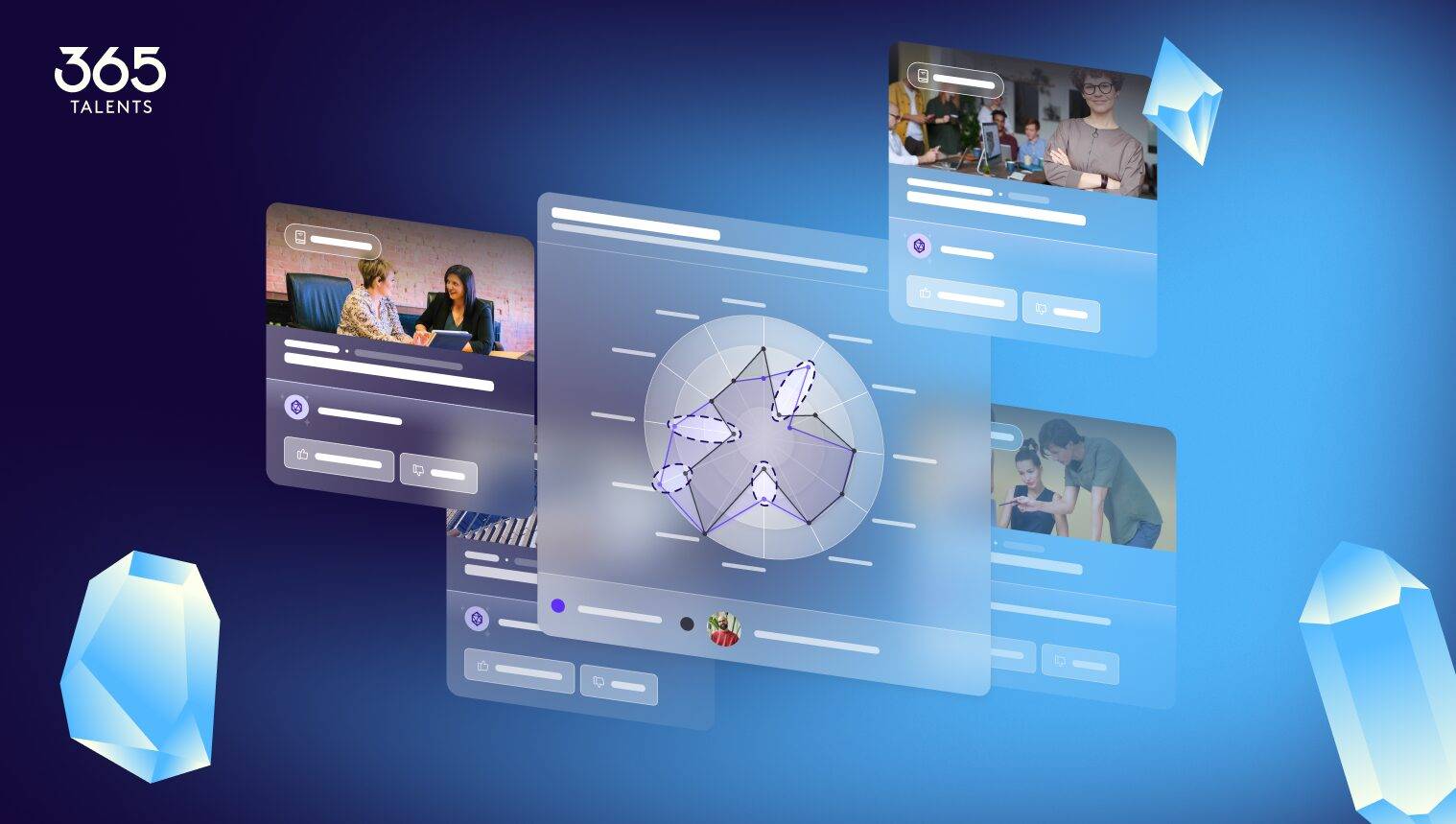
- Career path explorer: Employees can ask, “What could my next step be here?” and the AI agent shows surprising, skills-based opportunities they might never have imagined.
The risks of AI agents in HR: compliance, trust, and data protection
For all their benefits, AI agents don’t come without challenges. They may be fast, scalable, and tireless, but HR leaders need to keep one foot on the brake while accelerating innovation. Here are the key risks to keep in mind:
1. Data privacy and security
AI agents thrive on data—and HR sits on some of the most sensitive information in the organization. If access isn’t managed carefully, the risk isn’t just a GDPR fine; it’s a breach of employee trust. Think of it this way: you wouldn’t hand over everyone’s medical files to an intern—don’t let an AI agent roam without guardrails either.
2. Bias and fairness
If the data fed to AI agents reflects historical bias, the agent can unintentionally amplify it. That might mean overlooking qualified candidates or reinforcing inequalities in promotions. The solution? Monitor outputs, diversify training data, and always keep a human in the loop.
3. Compliance with company rules
Every organization has its own policies, from how leave is approved to how performance is measured. AI agents need to be configured to respect those rules; otherwise, you end up with a digital colleague who “goes rogue.”
4. Over-reliance on automation
AI agents are powerful, but they’re not magic. They can miss context, nuance, or human emotion. The real danger is when HR teams lean too heavily on automation and forget the “human” in Human Resources.
How to manage the risks
The good news: these risks are manageable. HR leaders can build trust by:
- Setting clear governance frameworks for AI use.
- Training staff to spot and correct bias.
- Maintaining human oversight for critical decisions.
- Being transparent with employees about how AI agents are used.
Handled responsibly, AI agents don’t just save time—they can actually raise the standard of fairness, compliance, and employee experience.


With ISO 42001 certification, GDPR compliance, and readiness for the EU AI Act, 365Talents leads the field in ethical, enterprise-grade AI. Your security, your standards, your peace of mind.

AI Agents in HR FAQs
Why are AI agents useful for HR teams?
They save time on repetitive tasks, deliver data-driven insights, and free HR teams to focus on strategy, engagement, and skills development.
What are the risks of using AI agents?
Potential risks include bias, lack of transparency, and data privacy concerns. These can be managed with ethical use, compliance, and human oversight.
When can HR use AI agents?
Across the employee lifecycle: recruiting, onboarding, skills management, career development, performance, and engagement.
What does 365Talents’ AI agent do?
Job Architect is 365Talents’ AI Agent that simplifies, accelerates, and modernizes job architecture creation — helping HR teams save time, ensure consistency, and future-proof their workforce.