2027 Skills Intelligence Report
Most organizations review their skills data once a quarter. A few have built something that keeps up. With Docebo, we asked 1,000+ HR and L&D leaders where their skills strategy actually stands, then looked at what the organizations pulling ahead did differently.
75% say they’re ready to reskill. 45% can’t get it prioritized.
1,000+ leaders surveyed · 11 experts interviewed
The fundamentals are in place. The strategy still isn’t moving.
By their own account, HR and L&D leaders are ready. Three quarters say their organization is well prepared to reskill for what’s coming, and the tactical groundwork backs them up.
- 75% of HR and L&D leaders say their organization is well prepared to reskill or upskill employees for evolving skill demands
- 96% say role-specific skill requirements are somewhat or clearly defined across their organization
- 94% say HR and L&D collaborate on skills planning at some cadence
- 93% say skills data is accessible to both teams when they’re making learning decisions
Then you ask what’s actually stopping them.
Access the 2027 Skills Intelligence Report
The top three blockers
Not tooling, which came second at 25%. Not stakeholder buy-in, at 8%. The single biggest barrier to an effective skills strategy is that it never wins the argument against everything else on leadership’s plate.

45%
said conflicting priorities
25%
don't have the right tooling in place
21%
pointed to governance
Everyone can name the gap. Almost nobody is funding the fix.

Tools versus skills
53% say AI literacy is their most critical skill gap. The same leaders rank closing that gap fifth out of six investment priorities. The spend goes to the thing people need to be upskilled on, not to the upskilling.
Accountability without control
63% say HR is primarily responsible for defining the skills strategy. Yet the learning budget sits fully within HR in only 43% of organizations. HR is on the hook for proving the skills strategy works without controlling the money that would fund it.
The system underneath
34% are still tracking employee skills in spreadsheets. And 43% refresh that data once a quarter, a snapshot of a workforce that has already changed. No amount of alignment between teams fixes a static foundation.

The full picture is in the report.
Budget splits, ownership, measurement, and where it breaks down
Download the reportBuild a system, not a tactic
A skills strategy that lives in a deck or a spreadsheet is a tactic, however thorough the taxonomy underneath it. Turning it into a system takes three things:
- A mandate from leadership: budget, headcount and authority pointed in one direction, the same way they are for security or compliance.
- A skills intelligence engine: data that updates continuously as roles shift and people move, so the organization is looking at where it stands today rather than last quarter.
- A governance team: a framework owned jointly by HR and L&D, so skills data stops being descriptive and becomes something the business plans around.
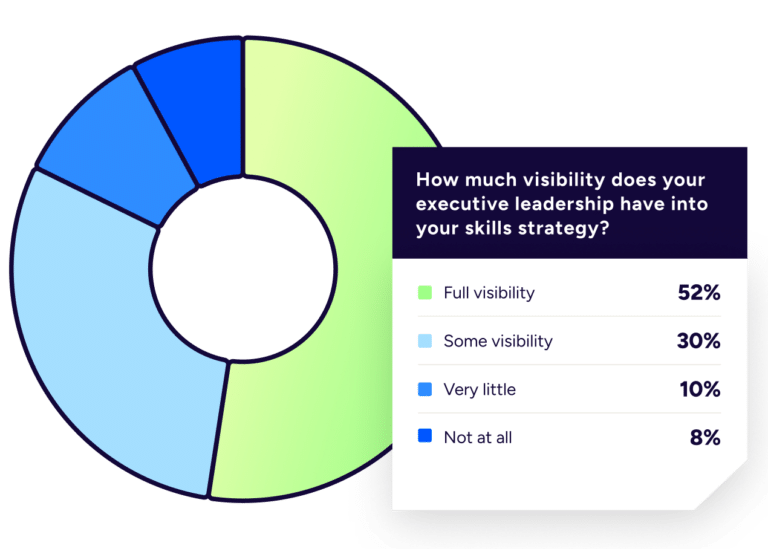
Three enterprises that stopped describing the problem



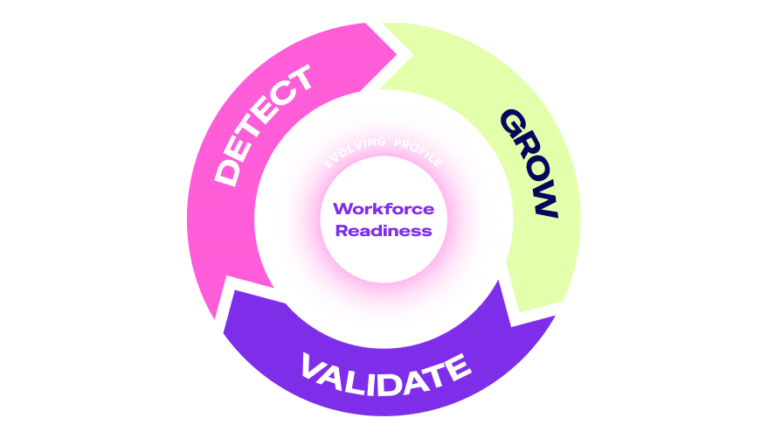
The blueprint they followed
Sponsorship, system choice, taxonomy, use case, governance, measurement. The six steps behind all three rollouts, in the order they need to happen:
- Get sponsorship before you get a system
- Choose for how skills actually move, not for the feature list
- Build your taxonomy from real data, not a survey
- Anchor it to a business use case, not the artifact
- Put governance in place and agree KPIs upfront
- Track progress in stages, from adoption to real impact
The voices behind the research
1,000+ HR and L&D leaders surveyed. 11 practitioners, analysts and academics interviewed.





See what this looks like in your organization
Most skills data shows you who’s available. Skills intelligence shows you who’s ready. Book a walkthrough and benchmark your organization against the study.
Book a walkthroughGet the 2027 Skills Intelligence Report
The data behind what’s blocking enterprise skills strategies, and the six-step blueprint for building past it.
