In today’s volatile, BANI-driven world—characterized by brittleness, anxiety, non-linearity, and incomprehensibility—employability has shifted from a personal responsibility to a strategic organizational capability. The ability for both individuals and organizations to acquire, adapt, and apply skills continuously determines whether they react to change or are prepared for it.
Skills-based employability is no longer optional—it’s essential for creating a workforce that can pivot, innovate, and thrive amid uncertainty.
From Job-Based Thinking to Skills-Based Employability
Traditional workforce models focus on roles and titles: fixed boxes on an org chart. But when roles evolve faster than structures, static job descriptions are no longer sufficient.
Building skills-based employability requires a shift: from managing positions to managing potential—from predefined career paths to fluid, skills-driven journeys.
This requires a new mindset:
- Not “Who fits this job?”
- But “Which skills do we have—and how can they evolve to meet future needs?”
New balance of responsibility:
- Employees: Continuously evolve, learn, and remain job-ready—internally or externally.
- Organizations: Provide visibility, opportunity, and structured pathways for skill growth.
Together, this creates a workforce that learns faster than change itself. More information in our dedicated Skills Impact Report.
Why Skills-Based Careers Matter
Retention Through Growth
Employees stay where they grow. Making skills development visible and actionable turns uncertainty into engagement. According to LinkedIn Learning (2024), 94% of employees would remain longer at a company that invests in their learning.
In France, GEPP agreements formalize this approach, ensuring employability is a long-term commitment, aligning development with organizational goals.
Mobility and Internal Agility
Employability enables movement. Continuous learning and transparent skills visibility allow employees to move laterally, diagonally, or upward—without leaving the organization.
Companies using skills intelligence platforms report a 30% increase in internal moves (Gartner, 2024), directly reducing recruitment costs and strengthening internal agility.
Strategic Workforce Planning (SWP)
Skills-based employability connects individual growth with strategic workforce planning. HR leaders can move from headcount planning to capability planning—anticipating the skills the business will need rather than simply filling roles.
Predictive analytics now identify skills at risk of obsolescence and emerging capabilities, transforming HR from a cost center into a resilience engine, optimizing talent allocation while securing long-term competitiveness.
In a weakened European market, HR directors see employability as a strategic lever to transform their cost center into an engine of resilience.
Employability as an Organizational KPI
In a skills-first organization, employability is no longer a soft, individual-level concept—it becomes a measurable organizational capability. By defining employability as a KPI, companies can quantify how ready and adaptable their workforce is, turning abstract concepts like “resilience” or “growth potential” into actionable metrics that inform strategy and decision-making.
Key dimensions to measure employability:
Skill Progression Over Time:
Tracking how employees acquire and develop new capabilities ensures that learning is not ad hoc but aligned with organizational needs. This enables HR leaders to identify growth trajectories, highlight high-potential employees, and anticipate which teams will be prepared for future roles.
Gap-Closure Rate Between Current and Strategic Skills:
Measuring the pace at which critical skill gaps are closed helps organizations stay ahead of market change. Predictive analytics can identify emerging skills at risk of obsolescence, guiding proactive reskilling programs before gaps impact business performance.
Internal Mobility and Reskilling Activity:
High employability translates into increased internal movement—lateral, diagonal, or upward. By tracking these flows, companies can assess whether employees are being optimally redeployed, whether development efforts are effective, and how internal mobility reduces dependency on external hiring.
Retention Linked to Learning and Development:
Employability directly impacts engagement and retention. Employees who see visible development pathways are more likely to remain with the company. Measuring retention in relation to participation in learning programs provides a tangible link between skills investment and workforce stability.
Readiness and Agility Indicators:
Real-time insights into skills maturity, adaptability, and readiness allow leaders to predict workforce responsiveness to change. This enables HR to plan strategically for reorganizations, succession planning, or emergent business needs, rather than reacting to talent shortages after they occur.
By operationalizing employability as a KPI, organizations can transform workforce development from a compliance or administrative exercise into a strategic advantage. It creates a measurable lens through which HR, executives, and managers can evaluate the organization’s ability to adapt, innovate, and scale. In effect, employability becomes a leading indicator of organizational resilience and competitive agility.

The Mutual Investment
Building skills-based employability is not a one-sided effort—it requires a mutual, strategic partnership between employees and the organization. This dual investment creates a virtuous cycle where both parties contribute to—and benefit from—the continuous growth of capabilities.
For Employees:
- Active Learning and Adaptability: Employees take ownership of their career development by engaging in continuous learning, acquiring new skills, and applying them in real-time. This includes formal training, project-based learning, mentorship, and self-directed exploration.
- Proactive Mobility: Employees embrace internal mobility opportunities, exploring roles that expand their capabilities and prepare them for emerging business needs.
- Responsibility for Career Readiness: Individuals are accountable for staying relevant—not just for their current role but for potential future roles within or outside the organization.
For Organizations:
- Visibility of Skills and Potential: Companies must provide transparency around which skills are valued, where gaps exist, and what career paths are possible. This includes tools for mapping skills, understanding transferable capabilities, and predicting future workforce requirements.
- Structured Development Opportunities: Organizations invest in structured learning pathways, reskilling initiatives, and AI-driven recommendations that guide employees to acquire the right skills at the right time.
- Alignment with Strategic Goals: Workforce planning, internal mobility, and learning initiatives are explicitly aligned with the organization’s long-term strategy, ensuring that employability drives business outcomes, not just HR metrics.
The Synergy of Mutual Investment:
When employees actively develop their skills and organizations provide tools, transparency, and opportunities, employability multiplies across the organization. The benefits are tangible:
- Faster internal mobility, with employees moving into roles that maximize their potential.
- Reduced recruitment costs as skill gaps are closed internally.
- Improved engagement and retention because employees feel their development is seen, valued, and supported.
- A continuous learning culture where employability is embedded into everyday workflows rather than being treated as a separate initiative.
In this way, employability is both a shared responsibility and a strategic asset. Employees gain career resilience and growth potential, while organizations gain agility, adaptability, and long-term competitiveness. Curious to learn how? Download our 2026 Skills Impact Report!
Building employability is not a future ambition—it is an operational imperative. By embedding it into KPIs, processes, and culture, organizations create a workforce that is ready for the skills of tomorrow, today.
From Vision to Execution: Operationalizing Skills Intelligence
Shifting to a skills-first organization requires more than intent—it demands a structured, measurable, and technology-enabled approach that makes skills intelligence operational across the talent lifecycle. While the vision of employability and internal agility is critical, turning that vision into reality requires clearly defined tools, processes, and frameworks that embed skill development into daily operations.
1. Tools and Skills Ontology
A successful skills-first transformation starts with robust tools and a living skills ontology. This provides a structured framework for defining, tracking, and categorizing skills across the organization:
- Unified Skills Language: Standardizes terminology across departments and geographies, ensuring that all employees, managers, and HR leaders speak the same skills language.
- Skills Mapping: Captures not only current competencies but also adjacent and emerging skills that may be required for future roles.
- Gap Identification: Enables predictive analysis to anticipate critical skill shortages before they impact operations or strategic initiatives.
By creating a dynamic skills inventory, organizations gain a real-time understanding of capabilities, potential, and growth opportunities—turning abstract workforce potential into actionable data.
2. Continuous Upskilling
Skills intelligence is only valuable if it is actively applied through continuous learning and development:
- Personalized Learning Paths: AI-driven recommendations guide employees toward relevant training opportunities, microlearning modules, or project-based experiences aligned with both current roles and future business needs.
- Learning Embedded in Workflows: Skills acquisition becomes part of day-to-day tasks rather than a separate initiative, ensuring learning is practical, contextual, and immediately applicable.
- Rapid Reskilling: Predictive insights identify skills at risk of obsolescence, allowing HR to proactively launch targeted reskilling programs to maintain employability.
Continuous upskilling not only maintains workforce readiness but also accelerates internal mobility, making employees more agile and organizations more resilient.
3. Incentives and Performance Integration
Embedding skills into performance management is critical to operationalizing skills intelligence:
- Recognition of Skill Development: Milestones, certifications, or demonstrable skill growth are tied to performance reviews, creating a culture where learning and achievement are celebrated.
- Targeted Incentives: Hot skills bonuses, career advancement opportunities, or project leadership roles are linked to acquiring strategic capabilities, motivating employees to engage proactively in skill development.
- Alignment with Business Goals: Ensures that employees’ learning efforts directly contribute to organizational priorities, bridging the gap between personal development and strategic workforce objectives.
This integration reinforces a performance culture that values potential as much as outcomes, turning employability into a measurable driver of business results.
4. Skills Maturity Scale
Operationalizing skills intelligence also requires continuous assessment of organizational skills maturity:
- Measurement Framework: Tracks progress across skill acquisition, internal mobility, and gap closure, providing a clear view of workforce readiness at the individual, team, and organizational levels.
- Benchmarking and KPIs: Compares skill development across departments, geographies, or business units to identify areas requiring additional focus.
- Strategic Alignment: Verifies that upskilling and reskilling initiatives align with the organization’s medium- and long-term strategic priorities.
A skills maturity framework ensures that learning is not episodic but continuous, enabling predictable, data-driven growth in organizational capabilities.
Making It Real with Adaptive Talent Intelligence
To move from theory to execution, organizations need adaptive talent intelligence platforms that connect skills data with actionable insights:
- Mapping Skills to Roles and Career Paths: Employees see which skills are required for current and future roles, making career progression transparent.
- Real-Time Insights: HR leaders and managers can track skill development, predict shortages, and identify high-potential talent in real-time.
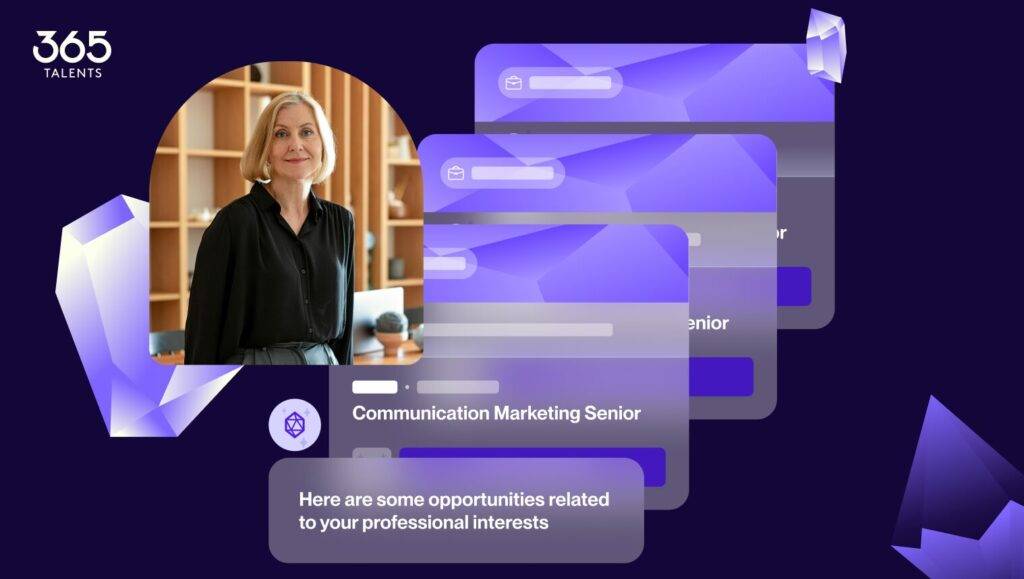
- AI-Driven Recommendations: Platforms suggest personalized learning pathways, career moves, and mobility opportunities based on evolving skill requirements and employee potential.
- Operationalizing Skills Across HR Processes: Workforce planning, succession management, recruitment, and performance evaluation are all informed by skills data, ensuring alignment between talent and business strategy.
By embedding AI-driven skills intelligence into everyday HR operations, organizations can:
- Anticipate critical skill gaps before they impact performance
- Enable internal mobility at scale
- Drive engagement by connecting employees’ growth to meaningful business outcomes
- Transform employability from a conceptual strategy into measurable, actionable organizational capability
| The Strategic Payoff |
|---|
| Operationalizing skills intelligence closes the gap between vision and execution: employees gain clarity on how to develop, grow, and remain employable, while organizations gain visibility, agility, and resilience. In a skills-first organization, operationalized skills intelligence is no longer just an HR tool—it is a strategic lever for competitiveness, turning workforce potential into tangible business outcomes. |
The difference between reacting to change and thriving in it lies in making skills intelligence actionable, continuous, and measurable across the talent lifecycle.
365Talents: Enabling a Future-Ready Workforce
Operationalizing a skills-first vision requires more than strategy—it requires adaptive tools and actionable insights. 365Talents empowers organizations to bridge skills gaps, enhance employability, and align workforce capabilities with business priorities.
How 365Talents addresses the changing work market:
- Mapping Skills and Job Architectures: Provides visibility on existing skills, gaps, and growth potential.
- AI-Driven Development Recommendations: Guides upskilling, reskilling, and career pathways aligned with current and future needs.
- Linking Workforce Planning to Skills Evolution: Ensures development efforts maintain organizational competitiveness and anticipate skill shortages.
Impact for organizations using 365Talents:
- +30% internal mobility as employees discover roles aligned with evolving skills
- Up to 25% reduction in external hiring costs through smarter redeployment and reskilling
- Accelerated workforce planning and succession management, with predictive insights
By turning skills visibility into action, 365Talents bridges today’s capabilities with tomorrow’s business requirements, making employability measurable, strategic, and actionable.
The Business Case for Skills-Based Employability
Beyond HR, a skills-first approach delivers measurable outcomes across five dimensions:
- Operational Efficiency: Optimizes resource allocation and reduces redundancy.
- Strategic Alignment: Turns skills data into a common language between HR and business.
- Change & Capability Building: Strengthens adaptability and develops future-ready skills.
- People & Leadership Impact: Empowers managers to act as talent accelerators.
- Technology & Scalability: Leverages AI to scale skills intelligence globally.
The result: a resilient, agile, and future-ready workforce.
Actionable next steps: Make your workforce future-ready
The future of work favors the prepared. Start reinventing career paths and building job-readiness through skills.
Download our free Skills Impact Report to discover practical strategies, insights, and frameworks for creating a resilient, agile, and future-ready workforce.

Download our 2026 Skills Impact Report!
Job readiness unlocked: how to build a skills‑first, future-ready workforce
GET YOUR COPY

Developing skills-based employability is essential for organizations navigating rapid change. It turns employability into a measurable, strategic capability—connecting individual growth to organizational resilience.
With AI-powered platforms like 365Talents, companies can operationalize skills intelligence, accelerate internal mobility, close gaps, and ensure their workforce is prepared for the demands of tomorrow. In a world where skills are the most stable currency, skills-based employability ensures that both people and organizations thrive. Book your demo and see the 5 stars rated Skills Intelligence platform live!